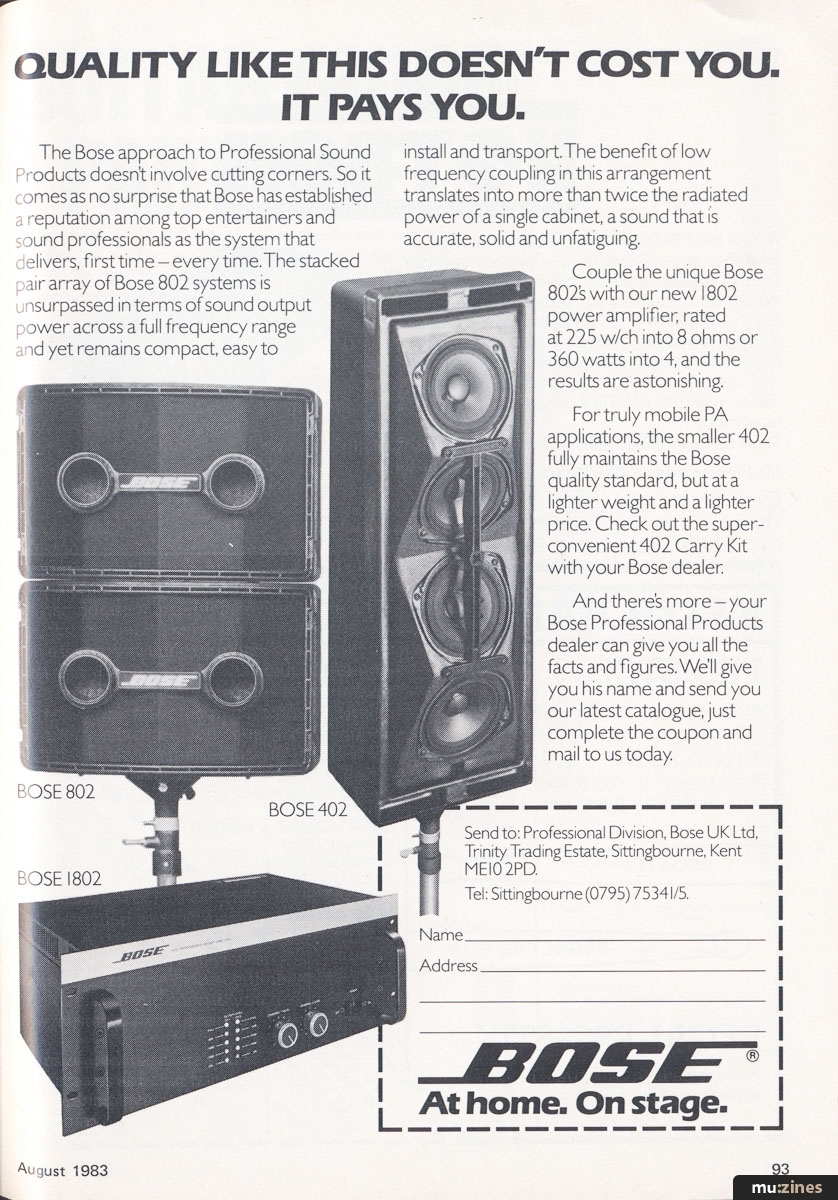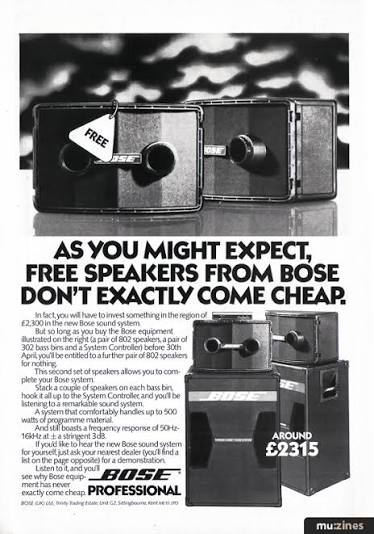
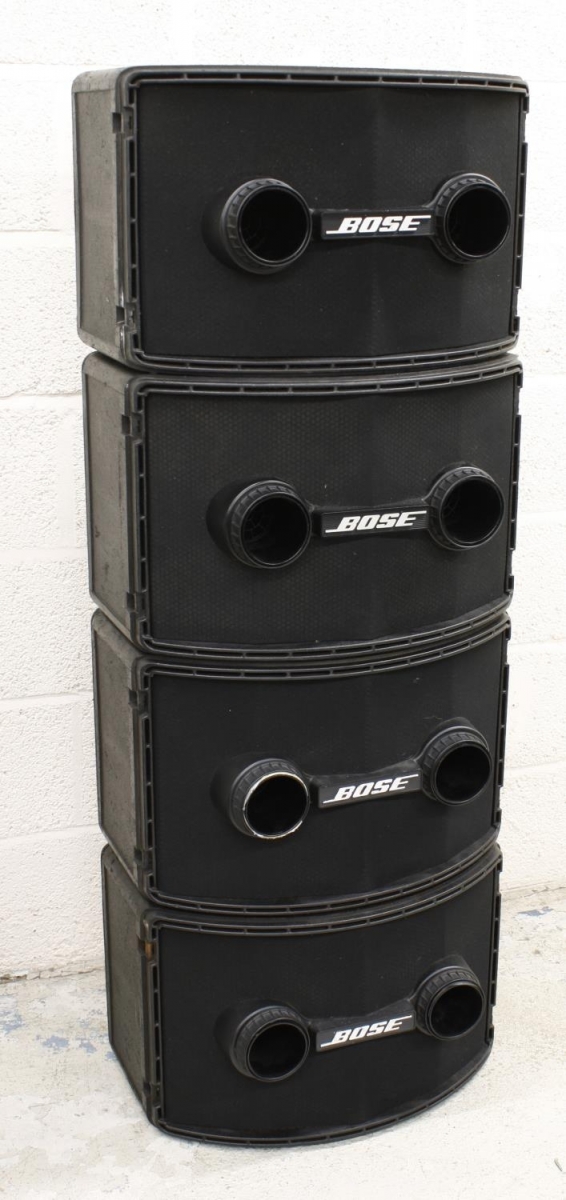
The design philosophy: eight small drivers.
A conventional two-way PA cabinet divides the signal between a woofer and a high-frequency driver. The 802 Series II uses eight 4.5-inch full-range cone drivers instead, arranged on a faceted Articulated Array baffle. It therefore avoids a conventional woofer-to-tweeter crossover, although the complete system still includes processing and protection circuitry.
The driver angles help produce the published 120° horizontal by 100° vertical coverage. That broad pattern gives a system designer a useful starting point for covering an audience, but placement, room reflections and the interaction between cabinets still affect the result.
Multiple small drivers share the work. They do not behave as one perfect large diaphragm at every frequency, and small size alone does not prove superior transient response. The useful achievement is the complete arrangement of drivers, enclosure and equalization. [1]
Bose 802 Series II specifications.
These figures describe the Series II system in Bose’s technical reference, with its specified active equalization. They should not be applied automatically to the original 802 or later generations.
- Driver complement
- 8 × 4.5-inch full-range drivers
- Nominal impedance
- 8 Ω per cabinet
- Power handling
- 240 W continuous pink noise, 55 Hz–16 kHz
- Frequency range
- 55 Hz–16 kHz
- Nominal coverage
- 120° horizontal × 100° vertical
- System processing
- 802C Series II active equalization required
- Published dimensions
- Approximately 33 × 52 × 32 cm (H × W × D)
- Published weight
- 14 kg / 31 lb
Source: Bose 802 Series II technical reference. [1] Confirm the exact cabinet and controller before selecting amplification, cabling or replacement parts.
The controller belongs in the line-level signal chain before the power amplifier. It provides the system equalization; it is not an optional tone-control accessory. See our controller reference page and setup and wiring FAQs.
The generational timeline & commercial success.
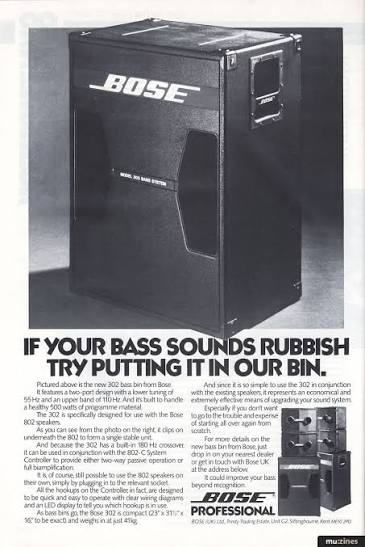
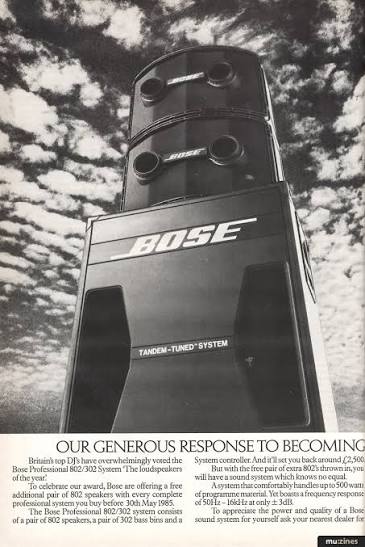
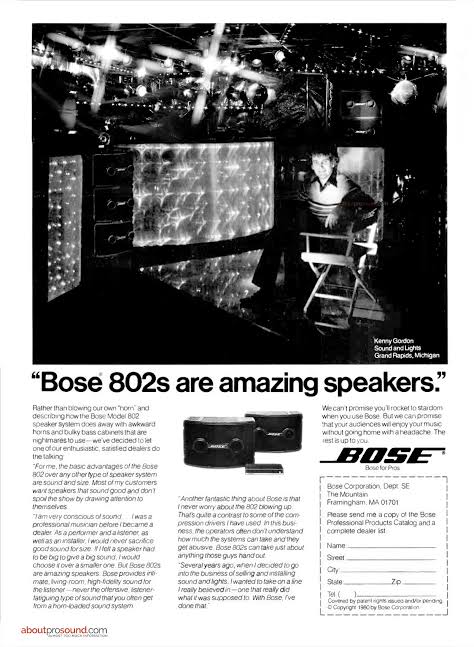
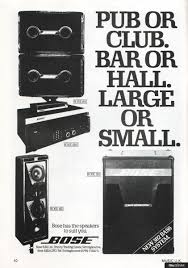
The original 802 arrived in 1978, following Bose’s earlier professional loudspeaker work. Series II continued the multi-driver approach in a system documented alongside its controller and bass-system options. The supplied 1984 service-manual cover provides a contemporary reference for that family. [2]
- 1978The original 802 introduces the platform that subsequent generations develop.
- 1984 referenceThe supplied manual cover documents the 802-II / 802W-II family and associated equipment.
- 2024Bose Professional announces Series V for selected markets, continuing the eight-driver format.
- 2026 → 2027Bose Professional previews the 802 LABS identity, with a phased transition planned from February 2027.
The model’s long life and repeated revisions demonstrate its importance to the manufacturer. A verified worldwide unit-sales total is not established by the references here, so this guide does not attach an estimated production figure to it.
A legacy reflected in the 802 LABS name.
In its 17 June 2026 announcement, Bose Professional confirmed plans to introduce the 802 LABS identity through a phased transition beginning in February 2027. The company explicitly connected the name to the original 802 loudspeaker and its engineering heritage. This is an announced future transition, rather than a name change already completed. [3]
For owners, the enduring lesson is practical: treat the loudspeaker, controller and amplifier as a system. The cabinet’s familiar appearance does not remove the need to match the processing, electrical load and replacement components to the version in front of you.
Keeping your Bose 802 working.
Before ordering a driver, surround, grille, latch or connector, identify the cabinet and inspect the original component. Part numbers, impedance, dimensions and mechanical fit matter. A similarly sized replacement is not automatically suitable.
BOSEMAN’s 244 separate part listings cover the original 802 / 802-E and later documented models, including Series II and original/SMD 802C controllers. Compatibility must be checked against each listing’s model and source. Each listing carries its own reference and specification into the enquiry.